The Finnish Flag
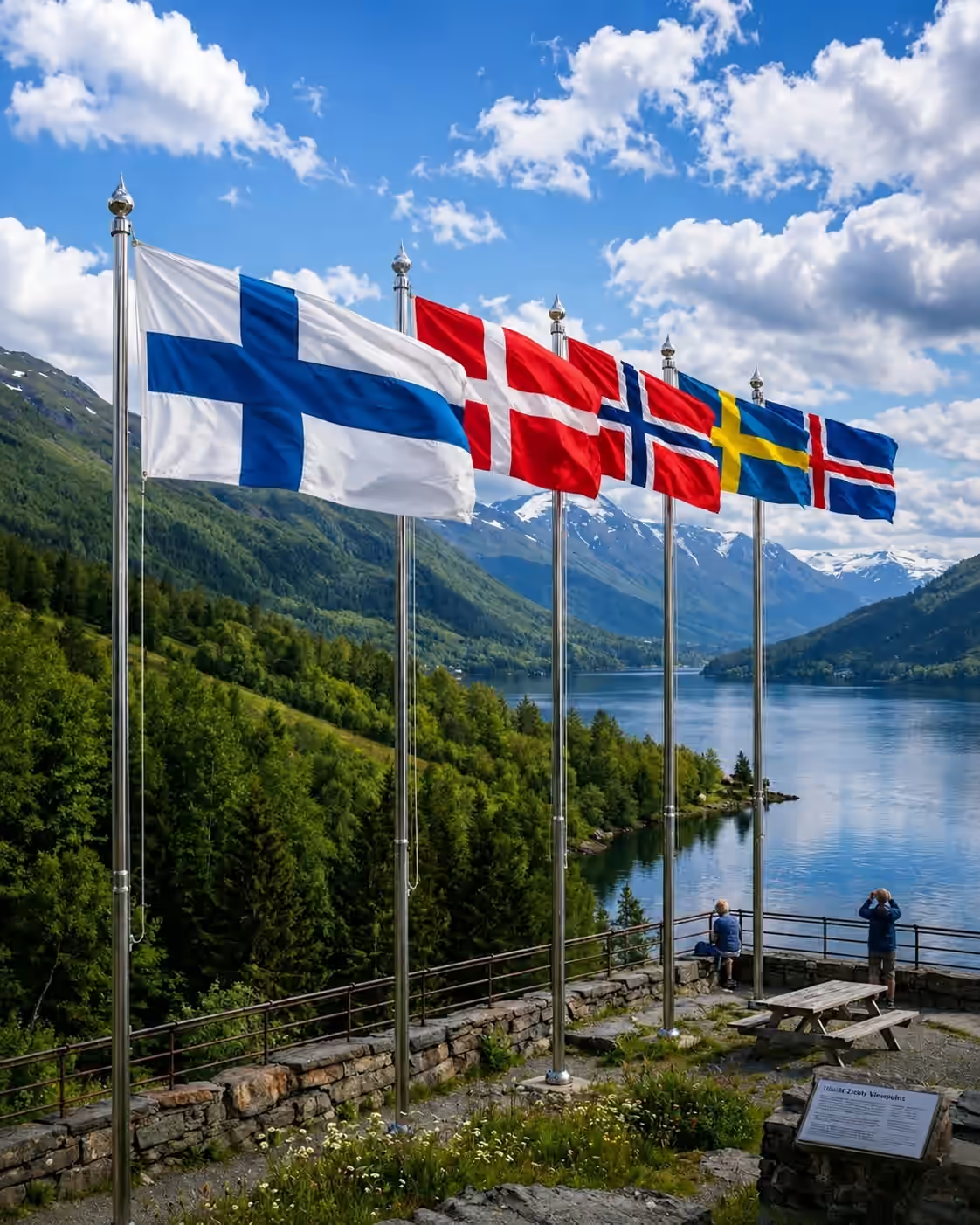
Nordic Region — Five National Flags Against the Northern Landscape
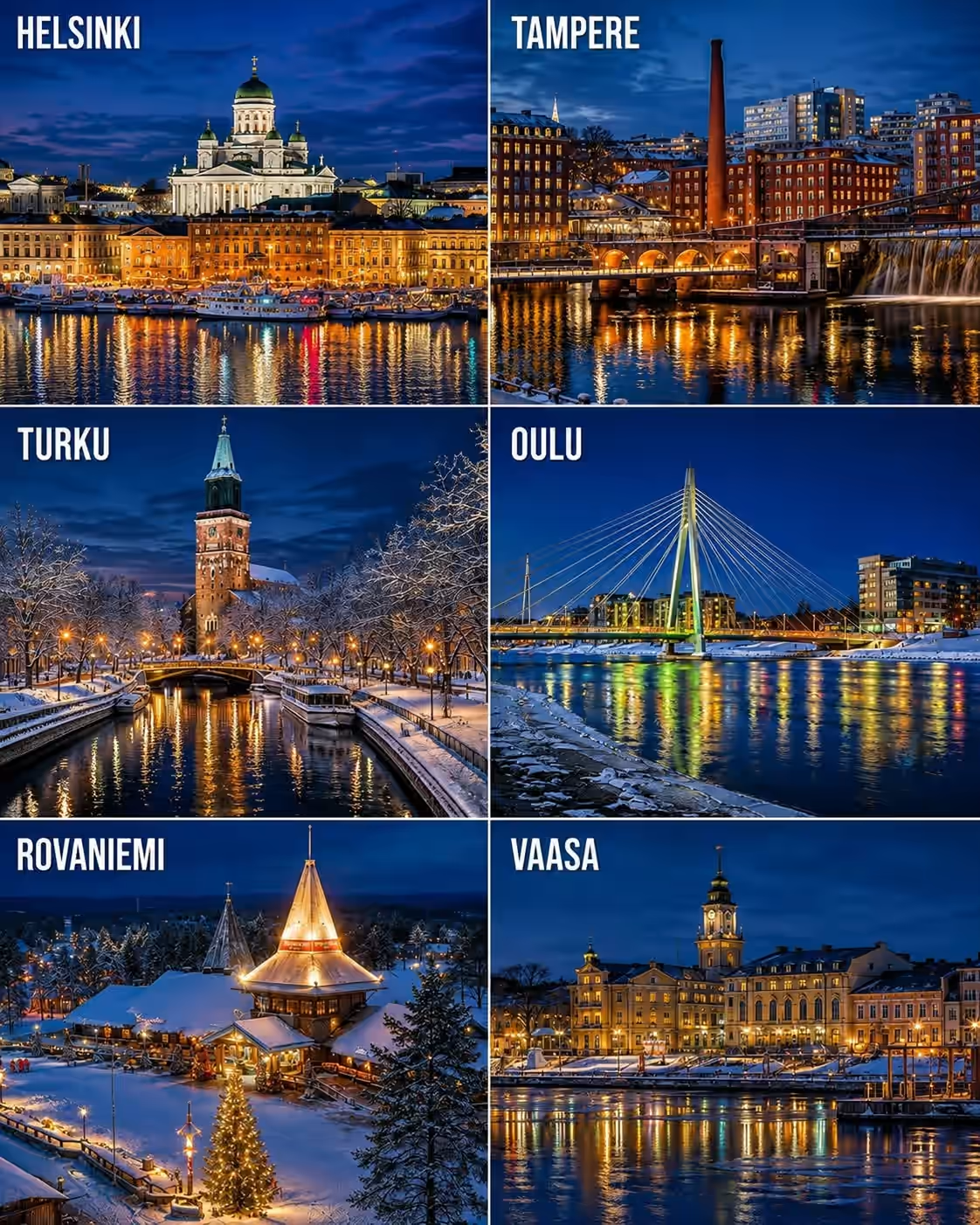
Finnish Cities
The Evolution of the Finnish Flag: From Early Ideas to the Nordic Cross (1848–1918)
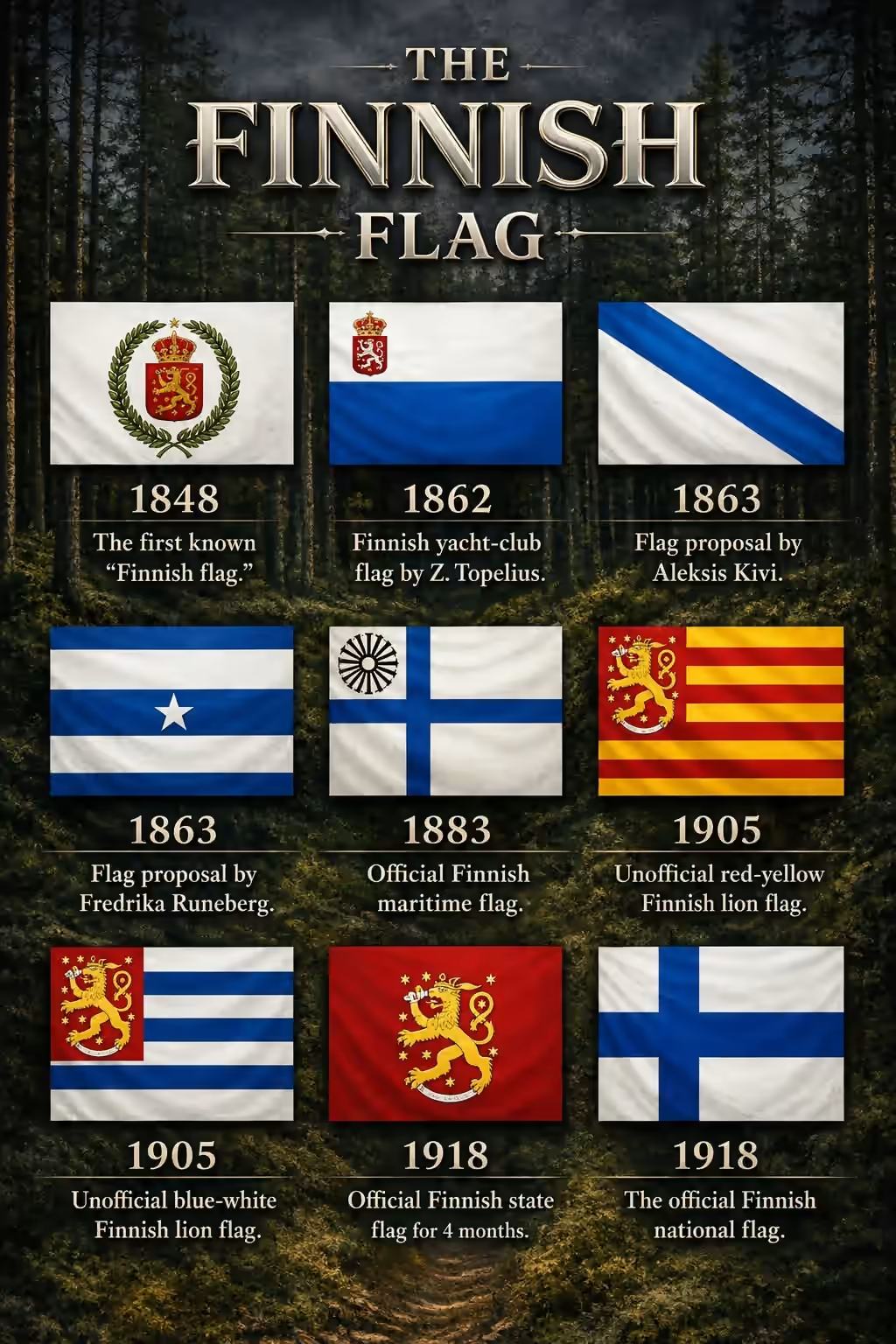
The Finnish flag that flies today—white with a bold blue Nordic cross—represents far more than a simple national symbol. Its design is the result of decades of cultural discussion, political struggle, and artistic proposals that gradually shaped Finland’s national identity. During the 19th and early 20th centuries, Finland moved from being an autonomous Grand Duchy under the Russian Empire toward independence, and the search for a national flag reflected this broader journey. The visual timeline illustrates how Finland’s flag evolved through multiple stages, combining cultural symbolism, resistance, and regional tradition before settling on the design officially adopted in 1918.
Early Concepts and the Birth of National Symbolism (1848–1860s)
The earliest recognizable “Finnish flag” appeared in 1848 during the Flora Day celebrations in Helsinki. This cultural festival celebrated Finnish language and identity, and it was here that the national anthem “Maamme” was performed for the first time. The flag used during this event featured Finland’s coat of arms, surrounded by laurel leaves on a white background. While it was not an official flag, it symbolized the emerging idea that Finland should have its own national identity distinct from Russian rule.
As Finnish national consciousness grew during the mid-19th century, intellectuals and cultural figures began proposing designs that could represent the nation. One of the most influential voices was Zachris Topelius, a writer and historian who in 1862 proposed that Finland’s national colors should be blue and white. He connected these colors to the natural landscape of the country: the countless blue lakes scattered across the land and the white snow that blankets Finland for much of the year. His proposal was reflected in a flag created for the Nyländska Jaktklubben, a yacht club, which featured a blue cross on a white background—an early precursor to the modern design.
Other prominent cultural figures also joined the discussion. In 1863, authors such as Aleksis Kivi and Fredrika Runeberg explored different ways to combine blue and white in flag designs. Some concepts included horizontal bands, diagonal stripes, and star patterns, showing that Finland was still experimenting with visual forms that could capture the spirit of the nation.
The Color Debate and Political Resistance (1905–1917)
As Finland entered the early 20th century, the discussion about the national flag became more political. During the period known as the “Years of Oppression,” when the Russian Empire attempted to reduce Finland’s autonomy, national symbols gained new importance as expressions of resistance.
Around 1905, the lion from Finland’s coat of arms became a powerful emblem of defiance and national pride. This symbol appeared on several unofficial flag designs, often referred to as “lion flags.” Two main color traditions competed during this time.
One design used red and yellow, the traditional colors of the Finnish coat of arms. Supporters believed these colors represented historical continuity and heraldic tradition. Another version combined the lion emblem with blue and white, reflecting the national colors that had become popular through earlier cultural movements.
This debate between heraldic tradition (red and yellow) and national landscape symbolism (blue and white) represented a broader question about how Finland should define itself visually and culturally.
Independence and the Final Choice (1918)
Finland declared independence from Russia in December 1917, and one of the first challenges for the new nation was choosing official national symbols. In early 1918, the government temporarily adopted a red flag with a yellow lion as the official state flag. However, this design was controversial and short-lived, lasting only a few months.
By May 1918, Finland officially adopted the blue Nordic cross on a white background, the flag that remains in use today. The design was created by artists Eero Snellman and Bruno Tuukkanen. The blue cross symbolically connects Finland with its **Nordic neighbors—Denmark, Sweden, Norway, and Iceland—**all of which use variations of the Nordic cross in their flags. At the same time, the blue and white colors honored the natural imagery described decades earlier by Topelius.
A Symbol of Finnish Identity
The final design of the Finnish flag represents a balance between nature, history, and regional belonging. The white background evokes Finland’s snowy winters, while the deep blue cross reflects the country’s thousands of lakes and waterways. The cross also situates Finland culturally within the Nordic world while maintaining its own unique identity.
What began as scattered proposals from poets, writers, and activists eventually became one of the most recognizable flags in Europe. The journey from the 1848 Flora Day banner to the 1918 Nordic cross reflects Finland’s transformation from a culturally awakening society under imperial rule to an independent nation confident in its identity.
Today, the Finnish flag stands not only as a national emblem but also as a reminder of the decades of creativity, debate, and determination that shaped it.
Source: This is Finland

